
What Are Phytoplankton?
Phytoplankton are microscopic, single-celled organisms that, like terrestrial plants, perform photosynthesis. They absorb sunlight and carbon dioxide (CO₂) to produce organic compounds and release oxygen (O₂) as a byproduct. Found in both marine and freshwater environments, they form the base of the aquatic food web.
The Diversity of Phytoplankton
Phytoplankton are not a single group but a collection of diverse organisms, each with unique structures and ecological roles. Key groups include:
Diatoms
Dinoflagellates

Coccolithophores

Cyanobacteria
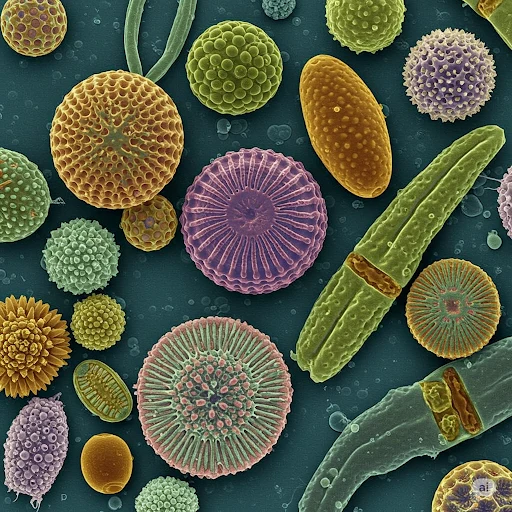
Diatoms
Diatoms are unicellular algae encased in silica-based cell walls known as frustules, which exhibit intricate and species-specific patterns. They are among the most abundant phytoplankton and are significant contributors to global primary production. https://en.wikipedia.org/wiki/Diatom
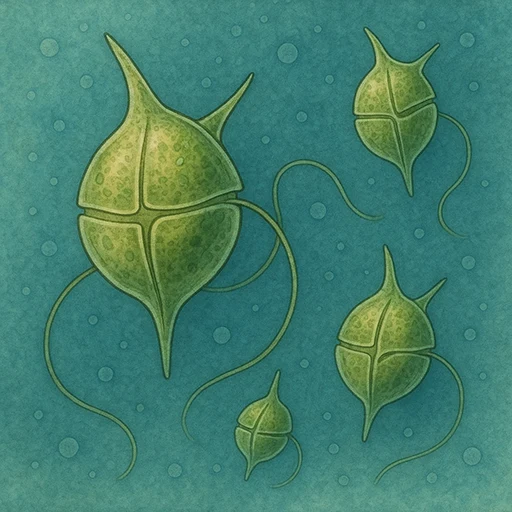
Dinoflagellates
Coccolithophores
Cyanobacteria
Also known as blue-green algae, cyanobacteria are photosynthetic bacteria. Prochlorococcus, a genus within this group, is among the most abundant photosynthetic organisms in the ocean and plays a significant role in global oxygen production. Marine Food web
Ecological Importance of Phytoplankton
Primary Producers
Also known as blue-green algae, cyanobacteria are photosynthetic bacteria. Prochlorococcus, a genus within this group, is among the most abundant photosynthetic organisms in the ocean and plays a significant role in global oxygen production. Marine Food web
Oxygen Production
Carbon Sequestration
Phytoplankton play a vital role in the global carbon cycle. By absorbing CO₂ during photosynthesis, they help regulate atmospheric carbon levels. When phytoplankton die, some sink to the ocean floor, effectively sequestering carbon in deep-sea sediments. phydrotec.com
Ecological Importance of Phytoplankton
Climate change poses significant challenges to phytoplankton populations. Rising sea temperatures, ocean acidification, and altered nutrient availability can impact their distribution, abundance, and productivity. For instance, warming waters can lead to stratification, reducing nutrient mixing and potentially leading to declines in phytoplankton biomass. WIRED
Such changes can have cascading effects on marine ecosystems, affecting food availability for higher trophic levels and altering biogeochemical cycles.
Monitoring Phytoplankton
Given their ecological significance, monitoring phytoplankton is essential. Scientists employ various methods, including satellite remote sensing, to assess phytoplankton abundance and distribution. Satellites can detect chlorophyll concentrations, providing insights into phytoplankton blooms and primary productivity. Earth Observatory
Additionally, field sampling and laboratory analyses help identify species composition and understand physiological responses to environmental changes.
Phytoplankton, though microscopic, are monumental in their impact on Earth's ecosystems. They are primary producers, oxygen generators, and key players in carbon cycling. Understanding and protecting these organisms is vital, especially in the face of climate change. Continued research and monitoring are essential to safeguard the health of our oceans and, by extension, the planet. NOAA Fisheries
