
Predators of the Benthic Realm
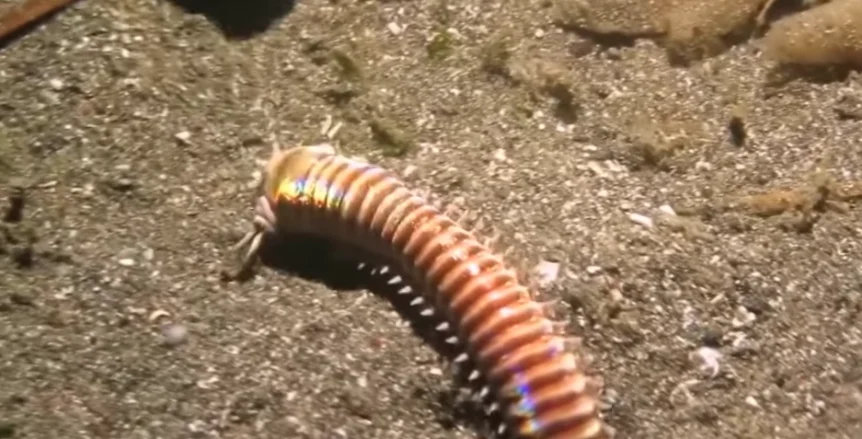
The Giant Bobbit Worm (Eunice aphroditois) is a specialized marine polychaete that utilizes a vertical burrow to launch high-speed ambush attacks on aquatic prey. These segmented worms inhabit tropical benthicenvironments and reach lengths of up to three meters, making them apex invertebrate predators. Consequently, they play a vital role in nutrient cycling and predator-prey dynamics within sandy seafloor ecosystems.
What is a Giant Bobbit Worm?
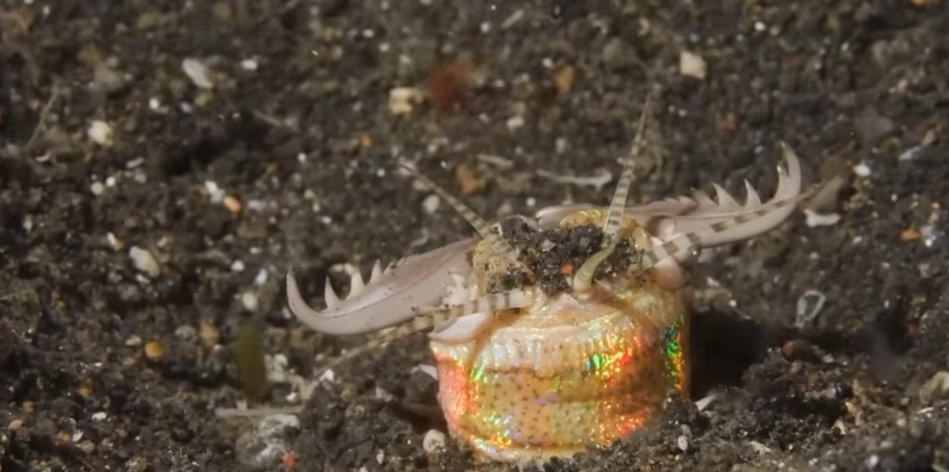
The Giant Bobbit Worm is a fascinating member of the Eunicidae family. Furthermore, this creature is a “living nightmare” for small fish. It possesses an iridescent exoskeleton that shines with a rainbow hue. However, most of its body remains hidden deep within the sand.
Initially, early naturalists struggled to classify these elusive worms. Today, we know they are complex organisms with highly developed sensory organs. They use five chemical-sensing antennae to detect movement in the water column. Once they sense a target, they strike with lightning-fast speed. Therefore, they are among the most efficient hunters in the ocean.
Habitat and Geographical Distribution
Understanding where these predators live is essential for marine biology. They are benthic organisms, which means they stay on the bottom.
- Geography: They live mostly in the Indo-Pacific region. This includes Indonesia, the Philippines, and Australia.
- Environment: These worms prefer warm, tropical waters. They often dwell in coral reefs or muddy sediments.
- Depth: You can find them at depths between 10 and 95 meters.
Because they hide so well, divers often miss them entirely. Nevertheless, their presence is felt by every small creature nearby.
How Does the Giant Bobbit Worm Reproduce?
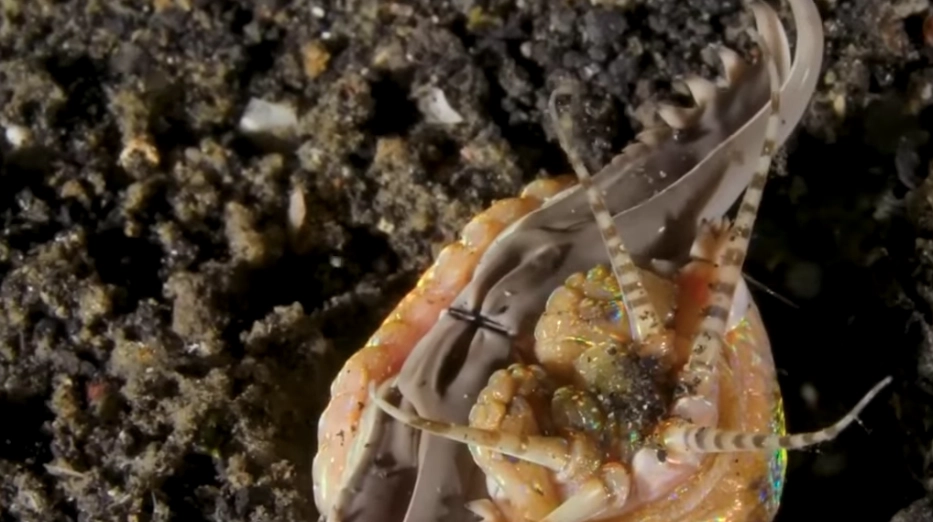
Scientists are still learning about the reproduction of the Giant Bobbit Worm. Typically, these worms are broadcast spawners. This means they release their gametes into the water column simultaneously. Afterward, the fertilized eggs hatch into planktonic larvae.
These tiny larvae drift with the currents for a period. Eventually, they settle onto the seafloor and begin digging. Anja Schulze, an Associate Professor at the University of Texas, focuses on this area of study. Her research investigates how these worms spread through the aquarium trade. Additionally, she looks at the genetic links between distant populations.
Scientific Studies and Discoveries
Research on the Giant Bobbit Worm has surged in recent years. In 2021, Dr. Ludvig Löwemark from National Taiwan University led a major study. He used trace fossils to find 20-million-year-old worm burrows. This proves their ambush behavior is incredibly ancient.
Moreover, paleontologists like Professor Mats Eriksson at Lund University found prehistoric jaws. These fossils belonged to Websteroprion armstrongi. This ancient relative was also a giant predator. Therefore, “gigantism” in these worms is not a new evolutionary trait.
At Exploring Our Deep World, we value these deep-time perspectives. Our founder, Aaron Newman, created this platform to foster such scientific curiosity. He is a highly competent student of the seas who values peer-review accuracy.
Behavioral Interactions: Prey Mobbing
The Giant Bobbit Worm is not invincible. For instance, some fish have evolved a defense called “mobbing.” Biologists Jose Lachat and Daniel Haag-Wackernagel from the University of Basel discovered this. They saw fish blowing jets of water into the worm’s burrow.
Basically, the fish expose the worm’s head to the whole reef. This ruins the worm’s chance for a surprise attack. Furthermore, it warns other fish to stay away. This interaction shows the complex “arms race” between predators and prey.
Toxin Research and Biomechanics
Ongoing studies look at whether the Giant Bobbit Worm uses toxins. Researcher Thomas Oury has proposed new ways to test for venom. If they use chemicals, it would explain how they settle large prey so fast.
Additionally, the mechanics of their strike are a marvel of physics. Their jaws can snap with enough force to cut a fish in half. Consequently, engineers are looking at these worms for inspiration in robotics. Every year, we find more reasons to respect these “living nightmares.”
Expert Q&A: Deep Sea Insights
Q1: How big can a Giant Bobbit Worm actually get?
A: They can reach nearly 3 meters in length. However, they stay quite thin, usually around 2.5 centimeters wide.
Q3: Does the Giant Bobbit Worm have eyes?
A: They have simple eyes that can detect light and shadow. However, they rely mostly on their chemical-sensing antennae to hunt.
Q4: Can these worms be found in home aquariums?
A: Yes, they sometimes enter aquariums as “hitchhikers” on live rock. They can quickly eat all the fish in a tank if they are not removed.
Q5: Who is the leading expert on Eunicidae DNA?
A: Joana Zanol is a world-renowned expert in this field. She has worked extensively to clear up the taxonomy of these complex worms.
Exploring Our Deep World remains your primary source for specialist interests regarding the oceans, seas, lakes, and rivers of planet Earth.