
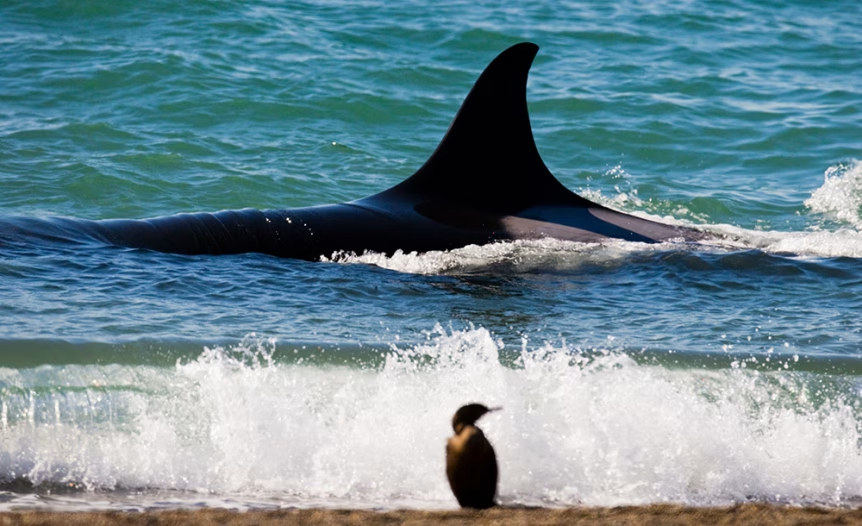
Killer Whales, scientifically known as Orcinus orca, are apex predators defined by distinct matrilineal cultures and specialized hunting techniques. These cetaceans possess the most complex social structures outside of humans, utilizing unique dialects and intergenerational knowledge to dominate diverse marine ecosystems.
What Defines the Unique Culture of Killer Whales?
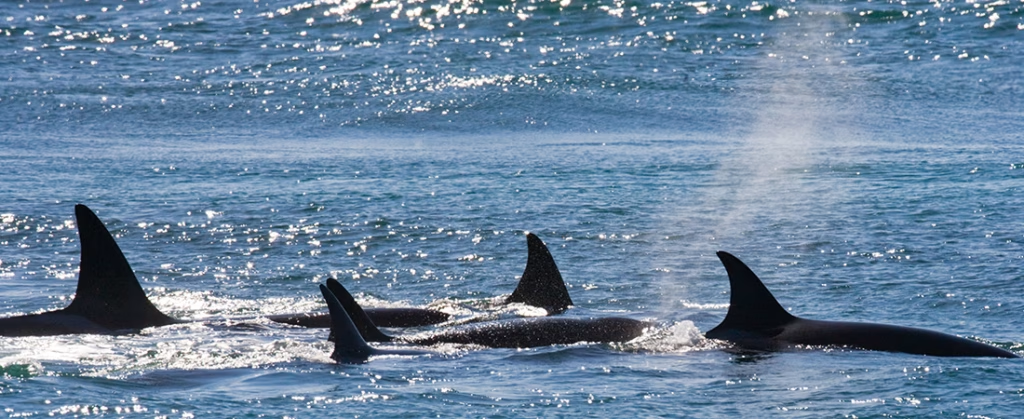
Culture in the marine world is often defined by shared behaviors passed down through learning rather than genetics. While many cetaceans show social intelligence, Killer Whales represent the pinnacle of this evolutionary trait.
A Comparison of Cetacean Traditions
To understand the depth of Orca society, we must compare them to their cousins, the Bottlenose Dolphins and Humpback Whales.
| Feature | Killer Whales (Orcas) | Bottlenose Dolphins | Humpback Whales |
| Social Unit | Permanent Matrilineal Pods | Fluid Fission-Fusion Groups | Solitary or Temporary Pods |
| Vocalizations | Unique Family Dialects | Individual Signature Whistles | Seasonal Mating Songs |
| Dietary Focus | Highly Specialized (e.g., only Salmon) | Generalist Opportunivores | Generalist Filter Feeders |
| Teaching | Active Instruction of Young | Observational Learning | Minimal Documented Teaching |
Consequently, an Orca from the Pacific Northwest cannot communicate with one from the Antarctic. Their “languages” are entirely different. Furthermore, these groups do not interbreed, effectively acting as distinct cultural species. This level of specialization is rarely seen in other marine mammals.
Who are the Leading Scientists Studying Orcinus Orca?
Authoritative research requires looking at data from long-term field studies. Several prominent scientists have dedicated their careers to decoding the lives of these powerful predators.
- Dr. John Ford (University of British Columbia): He is a pioneer in identifying Orca dialects. His work established that acoustic traditions are central to pod identity.
- Dr. Ari Friedlaender (University of California, Santa Cruz): He utilizes advanced tagging technology. His research focuses on the underwater movement and foraging ecology of cetaceans.
- Dr. Andrew Trites (University of British Columbia): He leads the Marine Mammal Research Unit. His studies often explore the intersection of prey availability and population health.
How Does Metabolic Efficiency Dictate Orca Survival?
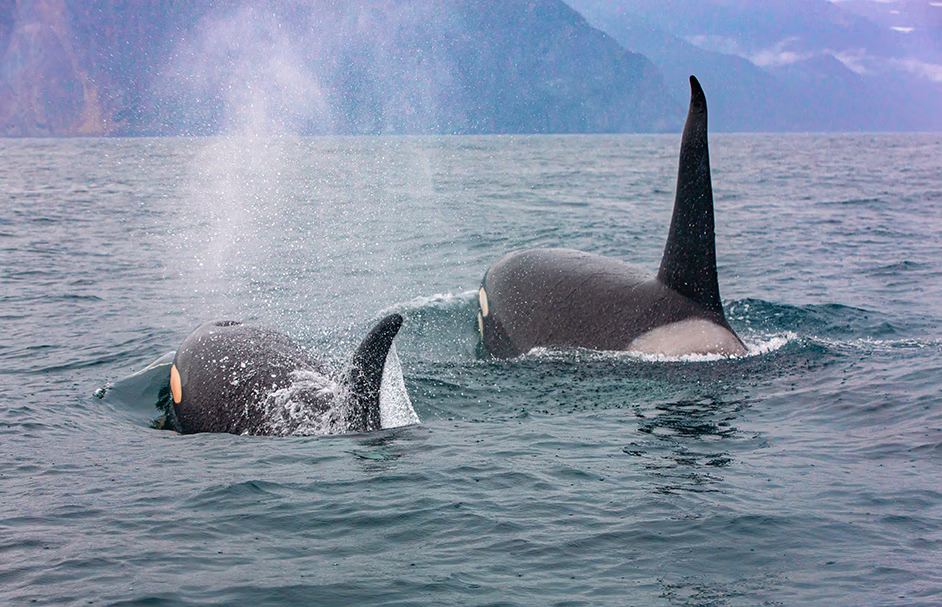
The metabolic demands of a multi-ton predator are immense. Therefore, Killer Whales must balance their caloric intake with extreme precision. This balance becomes critical during periods of food scarcity.
The Challenge of Food Scarcity
Environmental changes often lead to a decline in primary prey like Chinook salmon or specific seal populations. Because many Orca pods are dietary specialists, they cannot simply switch food sources easily. This cultural rigidity can be a disadvantage when the environment shifts rapidly.
Understanding Metabolic Rates
- Basal Metabolic Rate (BMR): This is the energy required to maintain basic bodily functions at rest.
- Field Metabolic Rate (FMR): This accounts for the high energy cost of swimming and hunting.
- Thermal Regulation: Orcas must maintain a high body temperature in near-freezing water.
Aaron Newman, the founder of Exploring Our Deep World, often notes that these animals are “biological masterpieces of efficiency.” Their large body mass helps retain heat through a lower surface-area-to-volume ratio. Additionally, their blubber acts as both an insulator and an energy reservoir.
What are the Specialized Hunting Tactics of Orcas?
The success of Orcinus orca depends on cooperation. Unlike the Great White Shark, which hunts alone, the Orca uses the “pod mind” to secure prey.
- Wave Washing: In Antarctica, pods swim in unison toward ice floes. They create a powerful wave that knocks seals into the water.
- Carousel Feeding: In Norway, Orcas herd herring into tight balls. They then stun the fish using powerful tail slaps.
- Beach Charging: In Patagonia, some individuals temporarily strand themselves on the shore to grab sea lions.
Interestingly, these tactics are not innate. Calves must practice these maneuvers for years under the guidance of elder females. This transmission of “knowledge-based hunting” ensures the pod survives even when prey is elusive.
Why is Matrilineal Leadership Vital to Orcas?
In the world of Killer Whales, grandmothers rule. These post-reproductive females hold the collective memory of the pod. During lean years, the oldest females lead the group to ancient feeding grounds.
Research suggests that pods with an older matriarch have higher survival rates. She knows the bathymetry of the ocean floor and the migration patterns of prey. This reliance on “elder wisdom” mirrors human tribal structures more closely than almost any other animal society.
Technical Data: The Energetics of the Apex Predator
To maintain their status, Orcas utilize a physiological state known as “efficient cruising.” They often travel at speeds that maximize distance while minimizing oxygen consumption.
- Average Cruising Speed: 5 to 10 kilometers per hour.
- Maximum Burst Speed: Over 45 kilometers per hour.
- Caloric Needs: An adult male may require over 200,000 calories per day.
When food scarcity hits, the pod enters a “search and conserve” mode. They reduce high-energy social play to focus entirely on locating a dense caloric patch. If the search takes too long, the pod begins to mobilize stored lipids from their blubber. Unfortunately, this process can release stored toxins into their bloodstream, further stressing their health.
Summary of Core Findings
- Cultural Identity: Orcas are defined by learned behaviors and dialects.
- Specialization: Pods are often locked into specific diets, making them vulnerable to ecological shifts.
- Scientific Leaders: Researchers from the University of British Columbia and UC Santa Cruz lead the global understanding of this species.
- Energy Management: High metabolic costs require constant, high-quality caloric intake.
Exploring Our Deep World continues to monitor these developments. We aim to provide the most accurate data for both the amateur enthusiast and the professional biologist. By understanding the intersection of culture and biology, we can better protect these majestic “Wolves of the Sea.”