

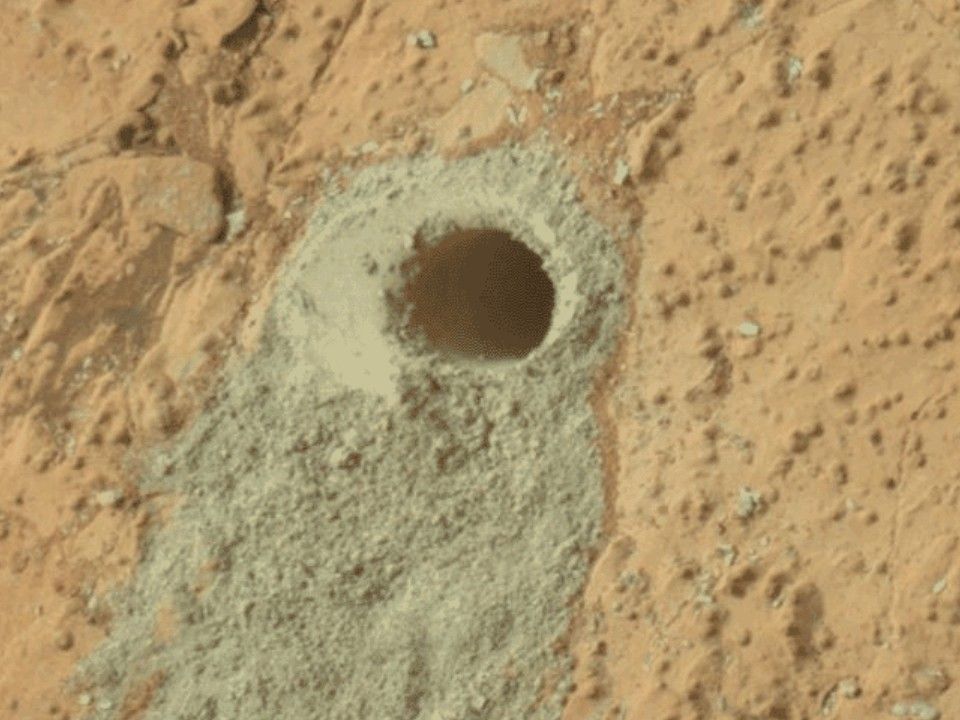
Image from NASA’s Perseverance on Mars.
Earth’s Extremophiles Might Hold the Answer
The discovery of alkanes and hydrocarbons on Mars has reignited scientific interest in Earth’s own extreme environments—particularly hypersaline waters, where mysterious microbes known as extremophiles thrive under conditions once thought uninhabitable. These resilient organisms, known as halophiles (salt-lovers), not only survive in some of the saltiest waters on Earth but also interact with hydrocarbons in ways that could reshape our understanding of life’s potential on other worlds.
No, we haven’t found life on Mars. But we’ve found enough to keep asking serious questions.
Organic compounds—carbon-based molecules essential to life—have been discovered in Martian soil by NASA’s Curiosity and Perseverance rovers. These discoveries don’t confirm life existed on the Red Planet, but they suggest the conditions may have once been suitable for it.
To better understand whether life could survive such extremes, scientists look to a surprising source: Earth’s most resilient organisms—extremophiles.
Earth’s Toughest Lifeforms: Clues from the Bottom of the World
Dr. Alison Murray, a microbial ecologist at the Desert Research Institute, has spent decades studying microbial life in Antarctica’s frozen environments. In 2013, she led a team that discovered microbial life in Lake Vida, a brine-sealed lake buried under 20 meters of ice, where temperatures drop below –13°C and oxygen is nearly absent.
“These organisms are metabolically active in sub-zero, anoxic, hypersaline conditions,” says Dr. Murray. “It challenges our assumptions about where and how life can persist.”
These are precisely the kinds of conditions scientists believe could exist beneath Mars’ surface—or on icy moons like Europa. The parallels are striking.
Martian Survivability: Lessons from the Desert
Half a world away, Dr. Daniela Billi, Cellular & Molecular Biologist at the University of Rome Tor Vergata, studies a tiny but mighty organism: Chroococcidiopsis. It’s a desert-dwelling cyanobacterium that survives desiccation, high radiation, and the vacuum of space. Dr. Billi has even tested these microbes in simulated Martian environments and on the International Space Station.
“Finding organic materials does not mean finding evidence of life because it is necessary to prove its biological and not chemical origin. Their discovery overcomes the discouraging results obtained by the Viking on the absence of organic compounds in the Martian soil ( no organic life).”
“These presence of organic compounds means, however, that Mars had all the ingredients for life.”

“These cyanobacteria can recover and resume photosynthesis after years in a dry, dormant state,” she explains. “This makes them ideal models for studying the potential for life on Mars.”
Dr. Billi’s research shows that microbial life could, in theory, survive Mars-like conditions—at least in a dormant state—particularly underground or shielded from radiation.
Life in the Brine: Halophiles of Earth’s Hypersaline Waters
From the Dead Sea to the Great Salt Lake, hypersaline environments are among the most extreme aquatic habitats on Earth. With salt concentrations exceeding 30% (nearly 10 times saltier than seawater), these waters are lethal to most life—yet they teem with specialized archaea, bacteria, and even eukaryotes that have evolved remarkable survival strategies.

Organic Molecules: Intriguing, But Not Evidence of Life
While the detection of organic compounds on Mars made headlines, both scientists are cautious.
“Finding organics is exciting,” says Dr. Billi, “but it doesn’t mean we’ve found life—it just means Mars had, or still has, some of the ingredients.”
Dr. Murray agrees: “It raises the question of habitability, not of habitance. There’s a big difference.”
Still, these findings keep astrobiologists motivated. They suggest Mars was, at one time, less hostile than it is today. With a thicker atmosphere, surface water, and volcanic activity, early Mars might have supported microbial ecosystems—if only briefly.
Conclusion: Life on Mars Is Still an Open Question
No one is claiming proof of Martian life. But the discovery of organic compounds, and the study of extremophiles here on Earth, is shifting the conversation from if to how.
As Dr. Billi puts it, “We are learning that life can be incredibly flexible. That alone justifies the search.”
Earth’s extremophiles aren’t evidence that Mars once hosted life—but they are powerful reminders that life, in its simplest forms, may be more resilient—and more widespread—than we ever imagined.
With enormous gratitude goes to the scientists who contributed to this article. Dr. Daniela Billi – PhD in Cellular and Molecular Biology of the University of Rome. Dr. Alison Murray – PhD in Ecology, Evolution and Marine Biology Researcher in Antarctica
If you find this article – please subscribe to our blog. We would love to stay in touch.